
Animal-Based Oils: Understanding Beef Tallow, Ghee, and Omega-3 Fish Oil
Animal-based oils and fats have long played an essential role in food production, cooking traditions, and modern ingredient supply chains. These materials come from animal sources and offer functional properties that many plant-based alternatives cannot fully match. Food manufacturers, bakers, food service operators, and nutraceutical companies continue to rely on them for heat stability, flavor, texture, and specific nutritional profiles.
This article explores the category of animal-based oils in detail. It focuses on three major groups: beef tallow, ghee and dairy fats, and omega-3 fish oil. Each product differs in origin, composition, processing, and commercial use. Understanding these differences helps buyers select the right ingredient for their specific application.
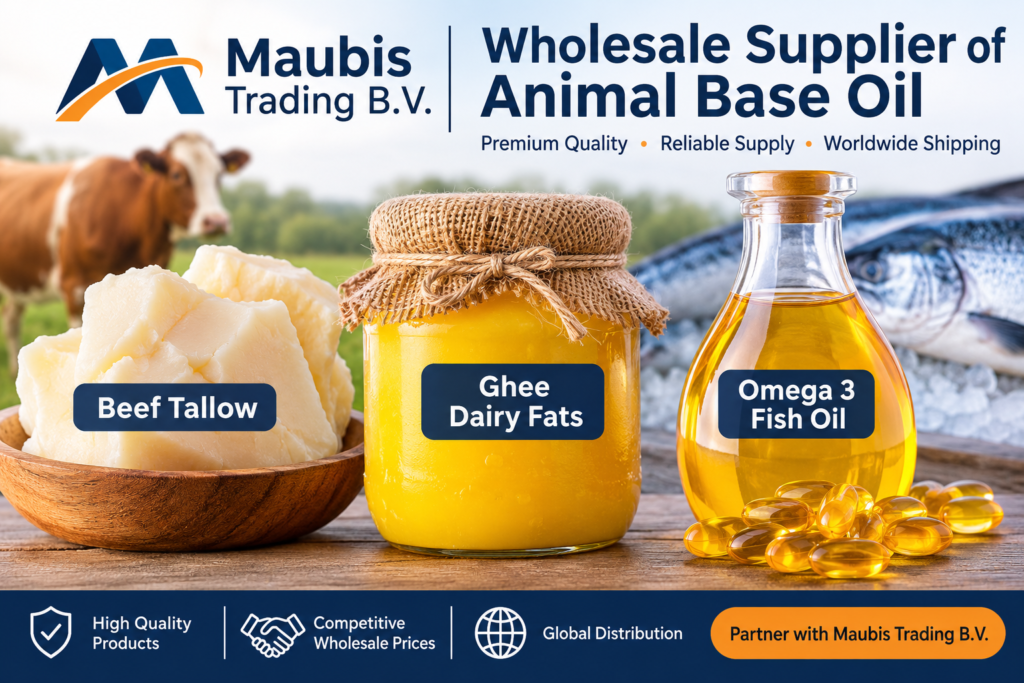
Understanding Animal-Derived Oils and Fats
Animal-derived oils and fats vary widely according to their source animal, the part of the animal used, and the processing methods applied. Rendered fats such as beef tallow come from adipose tissue that is heated and purified. Dairy fats such as ghee originate from milk and undergo clarification to remove water and milk solids. Marine oils such as fish oil are extracted from the tissues of oily fish and then refined to meet purity and potency standards.
These differences affect melting behavior, smoke point, flavor, shelf life, and suitability for specific processes. A fat that performs well in high-temperature frying may not suit softgel encapsulation. An oil valued for its omega-3 content may lack the solid fat structure needed in bakery laminates. Product selection therefore depends on the technical requirements of the final application rather than on a general preference for animal-derived ingredients.
Commercial buyers evaluate factors such as fatty acid composition, free fatty acid content, moisture levels, oxidative stability, and sensory characteristics. They also consider packaging formats, storage conditions, and the reliability of the supply chain. Clear product specifications help manufacturers maintain consistent results across production batches.
Beef Tallow: A Versatile Animal Fat
Beef tallow is produced by rendering the fat from cattle. The process involves heating the fat tissue, separating the pure fat from solids and water, and then filtering or refining the liquid fat. Once cooled, tallow becomes a firm, creamy-white to pale-yellow solid at room temperature. When heated, it melts into a clear golden liquid.
Its fatty acid profile typically includes a high proportion of saturated and monounsaturated fats. This composition contributes to its solid texture at ambient temperatures and its relatively high smoke point. These characteristics make beef tallow suitable for applications that require heat stability and a clean melting behavior.
Commercial Applications of Beef Tallow
Food manufacturers use beef tallow in commercial cooking and deep frying because it withstands repeated heating cycles better than many vegetable oils. It contributes desirable mouthfeel and crust formation in fried foods. Bakeries incorporate it into certain pastry and savory formulations where solid fat content supports texture and flakiness. Industrial users also employ technical grades of tallow in oleochemical processes, soap production, and related applications.
Quality depends heavily on the rendering process and the care taken during storage. Buyers look for consistent color, low free fatty acid levels, and freedom from off-odors. Packaging options commonly range from smaller tubs and buckets for food service or pilot production to larger drums, totes, and bulk containers for continuous manufacturing.
Halal Considerations in Beef Tallow Sourcing
Many markets require animal fats to meet specific religious dietary standards. Buyers seeking beef tallow halal look for clear documentation of slaughter practices, processing methods, and segregation throughout the supply chain. Reliable suppliers maintain transparent records that allow manufacturers to verify compliance with the standards relevant to their target markets. Proper certification and traceability reduce risk and support product labeling requirements.
Ghee and Dairy Fats: Understanding Milk-Derived Fats
Ghee is a clarified form of butter. Traditional production involves simmering butter to evaporate water and separate milk solids, leaving a pure butterfat with a characteristic nutty aroma and golden color. Modern commercial processes achieve similar results under controlled conditions that ensure consistency and extended shelf life.
Unlike regular butter, ghee contains almost no water or lactose. This difference raises its smoke point and improves storage stability. Anhydrous milk fat and butteroil represent related products that deliver standardized dairy fat for industrial use. These materials appear in bakery systems, confectionery, recombined dairy products, and various prepared foods.
Applications Across Food Manufacturing and Food Service
Food manufacturers value ghee for the distinctive flavor it brings to both traditional and contemporary recipes. Bakeries use it in laminated doughs, cookies, and specialty breads. Food service operators rely on it for high-heat cooking and for finishing dishes where a rich dairy note is desired. Ingredient buyers appreciate the range of packaging sizes that allow them to match purchase quantities to production needs.
When evaluating options, commercial buyers often consider packaging formats and cost efficiency. Discussions around ghee 1kg price typically arise when comparing smaller catering packs with bulk industrial containers. Pricing varies according to grade, origin, packaging type, and order volume. Buyers balance unit cost against convenience, storage capacity, and usage rate rather than focusing solely on the lowest available figure.
Proper storage in cool, dry conditions protected from light helps maintain quality over the typical shelf life of 18 to 24 months. Consistent sensory and chemical specifications across deliveries remain essential for manufacturers who depend on predictable performance.
Omega-3 Fish Oil: Marine-Derived Oils
Omega-3 fish oil is extracted from the tissues of oily fish species. After extraction, the oil undergoes refining, purification, and often concentration to increase the levels of eicosapentaenoic acid (EPA) and docosahexaenoic acid (DHA). These long-chain omega-3 fatty acids distinguish fish oil from terrestrial animal fats.
Unlike beef tallow or ghee, fish oil remains liquid at room temperature and is valued primarily for its fatty acid profile rather than for heat stability or solid fat functionality. Manufacturers of dietary supplements and functional foods use it as a key ingredient in softgels, liquid formulations, and fortified products.
Quality, Freshness, and Handling Considerations
Oxidation presents a major quality concern. Exposure to heat, light, and oxygen can raise peroxide and anisidine values, reducing both sensory quality and nutritional integrity. Responsible suppliers protect the oil with nitrogen blanketing, opaque or protective packaging, and controlled storage temperatures. Buyers should request recent analytical data on oxidation markers, heavy metals, and other contaminants.
Product concentration varies widely. Standard refined fish oils and higher-potency concentrates serve different formulation needs. Manufacturers producing omega 3 fish oil capsules select grades that deliver the required EPA and DHA levels while meeting regulatory and labeling requirements. Consistency from batch to batch supports accurate dosing and reliable finished-product performance.
Storage and handling protocols differ markedly from those used for solid animal fats. Cool temperatures, protection from light, and minimized air exposure help preserve quality throughout the supply chain.
Comparing Beef Tallow, Ghee, and Omega-3 Fish Oil
These three products belong to the broader category of animal-based oils yet serve distinctly different purposes. The following comparison highlights key differences:
| Aspect | Beef Tallow | Ghee / Dairy Fats | Omega-3 Fish Oil |
|---|---|---|---|
| Primary Source | Cattle adipose tissue | Cow’s milk / butter | Oily fish species |
| Physical State (room temp) | Solid / firm | Semi-solid to solid | Liquid |
| Key Functional Traits | High smoke point, heat stability | Flavor, moderate heat tolerance | EPA & DHA content |
| Main Applications | Frying, bakery, industrial | Culinary, bakery, food service | Supplements, functional foods |
| Typical Buyers | Food manufacturers, fryers | Food manufacturers, food service | Nutraceutical companies |
| Critical Quality Factors | Rendering quality, free fatty acids | Flavor, moisture, purity | Oxidation levels, potency, purity |
The products are not interchangeable. A formulator seeking heat-stable frying fat will not achieve the same results with fish oil. A supplement manufacturer requiring concentrated EPA and DHA cannot substitute tallow or ghee. Matching the ingredient to the functional and compositional needs of the application remains the central decision criterion.
Quality and Sourcing Considerations for Animal-Based Oils
Commercial buyers evaluate several factors when sourcing animal-based oils and fats. Clear product specifications form the foundation. These typically cover physical appearance, chemical parameters, sensory attributes, and any relevant purity requirements. Certificates of analysis for each batch allow buyers to verify that deliveries meet agreed standards.
Processing methods influence both functionality and compliance. Traceability from source to finished ingredient supports risk management and regulatory needs. Packaging must protect the product during transport and storage while suiting the buyer’s handling systems. Solid fats and liquid oils often require different packaging solutions and storage conditions.
Supplier reliability affects production continuity. Consistent quality, predictable lead times, and responsive logistics reduce the risk of line stoppages. Bulk procurement can lower unit costs, yet it requires adequate storage capacity and inventory management. Transportation conditions, especially temperature control and protection from contamination, also influence final quality upon arrival.
Food manufacturers select products according to the demands of their specific processes. A company running continuous frying operations prioritizes smoke point and oxidative stability. A bakery focuses on solid fat content and melting profile. A supplement producer emphasizes potency, purity, and low oxidation. Maubis Trading B.V. serves as one potential sourcing resource for businesses exploring these ingredients across food manufacturing and related sectors.
The Role of Animal-Based Oils in Modern Food Manufacturing
Animal-derived fats and oils continue to occupy distinct niches within modern food systems. Some manufacturers value traditional ingredients for their sensory contribution and clean-label positioning. Others select them primarily for technical performance under specific processing conditions. Consumer preferences, regulatory frameworks, and cost considerations all influence purchasing decisions.
Formulators assess functionality first. They examine how a fat behaves during mixing, heating, cooling, and storage. They also consider interactions with other ingredients and the impact on finished-product shelf life. When an animal-based oil or fat delivers measurable advantages in texture, stability, or flavor, it remains competitive even against lower-cost alternatives.
The diversity within the category allows manufacturers to address varied needs with targeted solutions rather than a single universal fat. This specialization supports both large-scale industrial production and more specialized culinary or nutritional applications.
Frequently Asked Questions About Animal-Based Oils
What are animal-based oils?
Animal-based oils and fats are lipid materials derived from animal sources. They include rendered fats such as tallow, dairy fats such as ghee, and marine oils such as fish oil. Each type offers different functional and compositional properties.
What is the difference between beef tallow and ghee?
Beef tallow is rendered from cattle fat and is valued for heat stability. Ghee is clarified butterfat from milk and is prized for its flavor and moderate heat tolerance. Their sources, fatty acid profiles, and primary uses differ significantly.
Is beef tallow halal?
Beef tallow can be produced and certified as halal when slaughter, processing, and handling meet the relevant religious standards. Buyers should request appropriate documentation and verification from their suppliers.
What influences the ghee 1kg price?
Factors include the grade of ghee, production method, packaging type, order volume, origin, and current market conditions for dairy fats. Smaller packs often carry a higher unit cost than bulk formats.
What are omega 3 fish oil capsules?
These are dietary supplements that encapsulate refined or concentrated fish oil containing EPA and DHA. Manufacturers select fish oil grades that meet potency, purity, and stability requirements for softgel production.
How should animal-based oils be stored?
Solid fats such as tallow and ghee should be kept cool, dry, and protected from light. Fish oil requires additional protection from oxygen and heat, often involving nitrogen blanketing and controlled temperatures.
What should businesses consider when sourcing animal fats wholesale?
Key considerations include product specifications, quality documentation, packaging suitability, supplier reliability, logistics capabilities, and alignment between the ingredient’s properties and the intended application.
Conclusion
Beef tallow, ghee and dairy fats, and omega-3 fish oil represent three distinct branches within the broader category of animal-based oils. Each product brings unique physical characteristics, compositional strengths, and commercial applications. Tallow supports high-temperature cooking and certain industrial processes. Ghee contributes flavor and functionality in culinary and bakery settings. Fish oil supplies long-chain omega-3 fatty acids for nutritional products.
Successful use depends on matching the ingredient to the technical and quality requirements of the final product. Clear specifications, careful quality verification, appropriate packaging, and reliable supply chains all contribute to consistent results. By understanding the differences among these materials, food manufacturers, ingredient buyers, and distributors can make informed sourcing decisions that support both product performance and operational efficiency.